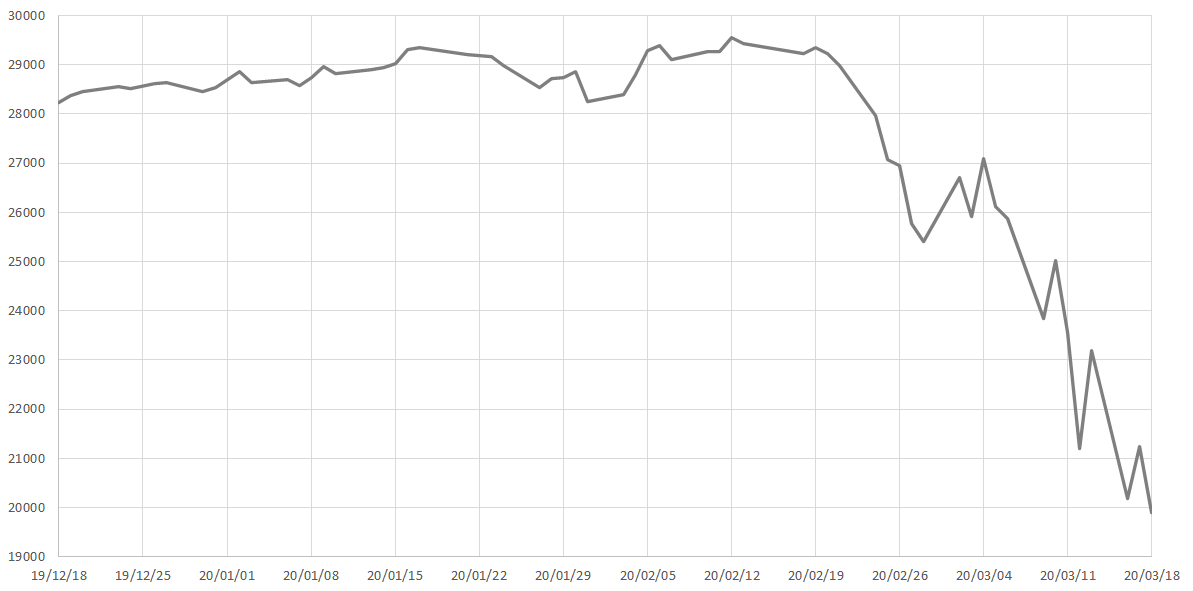
Understanding the Dow Jones Industrial Average
The Dow Jones Industrial Average (DJIA) is one of the most recognized stock market indices in the world. It serves as a barometer for the overall health of the economy and is crucial for investors and analysts alike. This article delves into the components, significance, and functioning of the DJIA, providing readers with a comprehensive understanding of its role in the financial markets.
What is the Dow Jones Industrial Average?
The Dow Jones Industrial Average is a stock market index that captures the performance of 30 prominent, publicly-owned companies in the United States. These companies are leaders in their respective industries and are selected based on specific criteria, including market capitalization and reputation.
Established in 1896 by Charles Dow, the DJIA was originally composed of 12 companies. Today, it includes firms that have significant influence on the U.S. economy, making the index a critical measure of market trends and economic indicators.
Components of the Dow Jones Industrial Average
The DJIA is made up of 30 major companies from various sectors, including technology, healthcare, finance, and consumer goods. Here are a few notable components:
- Apple Inc. (AAPL)
- Microsoft Corp. (MSFT)
- Coca-Cola Co. (KO)
- Boeing Co. (BA)
- Johnson & Johnson (JNJ)
Each of these companies is selected based on its ability to provide valuable insights into the broader market and the overall economy. The average of stock prices for these companies determines the index’s value.
How is the DJIA Calculated?
The calculation of the Dow Jones Industrial Average is straightforward but unique. Instead of using a market capitalization-weighted average like many indices, the DJIA uses a price-weighted method. This means the companies with higher stock prices have a more significant impact on the index’s movements.
The Formula
The formula for calculating the DJIA is:
[ ext{DJIA} = rac{ ext{Sum of stock prices}}{ ext{Dow Divisor}} ]
The Dow Divisor is adjusted over time to account for stock splits and changes in the component companies, ensuring that the index reflects true market conditions.
The Significance of the DJIA in Financial Markets
The DJIA is widely regarded as an essential tool for measuring the performance of the U.S. stock market and, by extension, the economy. Here are some reasons why this index holds significant importance:
- Economic Indicator: Movements in the DJIA closely track the economic health of the country. Rising stock prices often correlate with increased consumer and business confidence.
- Investor Sentiment: Daily changes in the DJIA can greatly influence investor sentiment, impacting buying and selling behavior across financial markets.
- Media Coverage: The DJIA is continuously covered in media reports, making it a go-to reference for those interested in financial news and analysis.