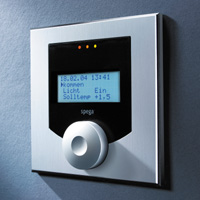
Categories of Smart Home Devices
Smart home devices can be broadly categorized into several types, each serving specific needs and preferences:
1. Smart Lighting
Smart lighting systems allow you to control the brightness, color, and schedules of your lights.
- Features: Dimmer functions, color options, automation.
- Popular Brands: Philips Hue, LIFX, Wyze.
These systems enable energy savings and personalized ambiance for any occasion. In the following section, we’ll dive deeper into the energy-saving benefits of smart lighting.
2. Smart Thermostats
Smart thermostats learn your heating and cooling preferences over time, optimizing energy usage.
- Benefits: Remote control, energy reports, adaptive scheduling.
- Popular Models: Nest Learning Thermostat, Ecobee SmartThermostat.
Such devices can substantially lower your energy bills while enhancing comfort. Up next, we will investigate smart security features that can protect your home.
3. Smart Security Systems
Home security systems have undergone significant enhancements with the introduction of smart technology.
- Components: Cameras, doorbells, motion detectors, alarm systems.
- Brands: Ring, Arlo, August, SimpliSafe.
These solutions facilitate real-time monitoring and instant alerts. Let us now look into the innovative world of smart appliances.
4. Smart Appliances
Smart appliances, ranging from refrigerators to washing machines, are designed for user convenience and efficiency.
- Examples: Smart refrigerators with inventory tracking, ovens that can be preheated remotely.
- Brands: Samsung Smart Fridge, Whirlpool Smart Washer.
These devices help streamline everyday chores and reduce energy consumption. Having explored appliances, let’s turn our attention to virtual assistants and how they integrate with other smart devices.
5. Smart Assistants
Virtual assistants like Amazon Alexa, Google Assistant, and Apple Siri act as central hubs for managing smart devices.
- Capabilities: Voice control, routines, integration with other devices.
- Popular Devices: Amazon Echo, Google Nest Hub, Apple HomePod.
With smart assistants, control and automation become more intuitive. Next, we will discuss the Internet of Things (IoT) and its role in smart home technology.
The Role of IoT in Smart Homes
The Internet of Things (IoT) is the backbone of smart home technology. By connecting devices through the internet, IoT creates an ecosystem that enables communication between various devices.
- Interconnectivity: Devices can share data and insights for optimized functionality.
- User Experience: Improved ease of use and improved automation.
As IoT evolves, expect even more integration and capabilities in everyday devices. Let’s now look at how to get started with building your smart home.